
Wisconsin Public Records Law in Milwaukee County
Wisconsin opens with a clear policy. The public is entitled to the greatest possible information about government affairs, subject to privacy and statutory limits. That policy is the foundation of every Milwaukee County public records request. Records are open unless a statute, a rule, a court order, or a balancing test limits access.
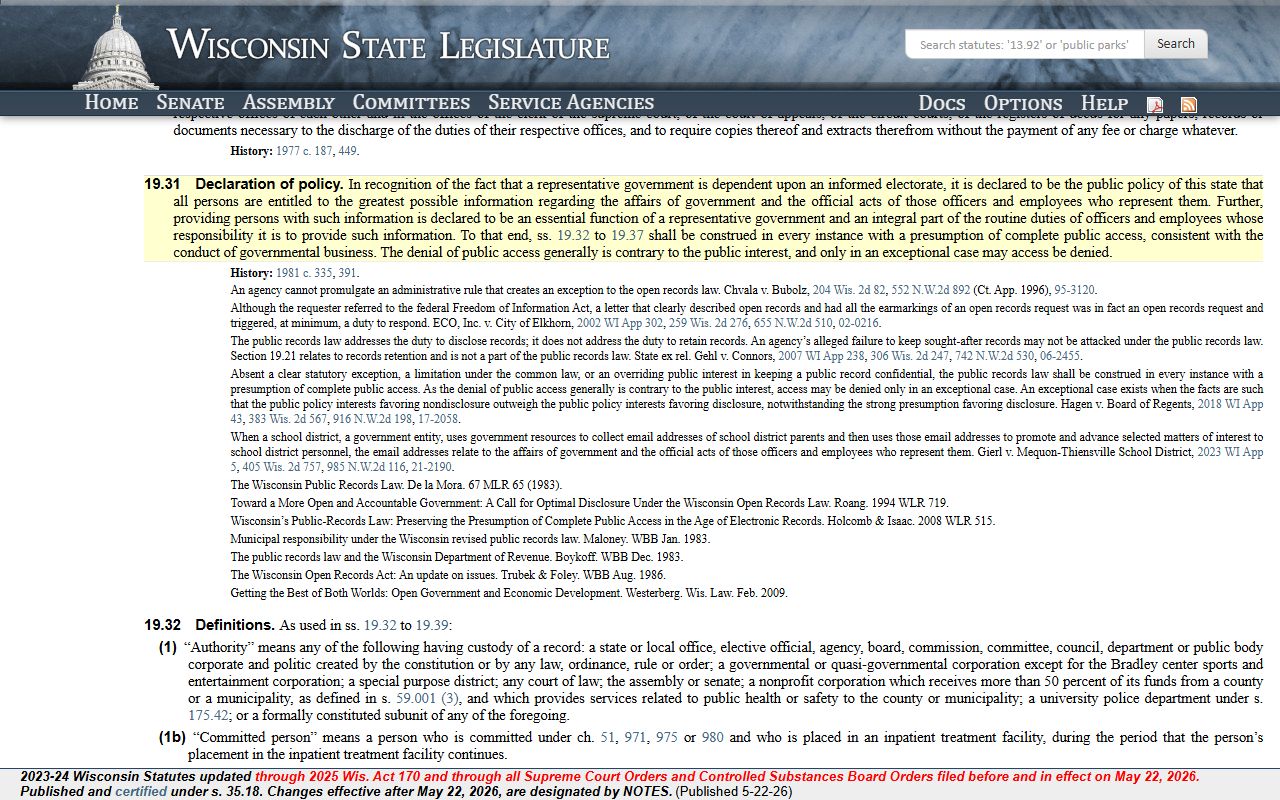
The policy declaration sits in Wis. Stat. § 19.31, which directs that the law be read with a presumption of complete public access.
A 2022 Court of Appeals case from Milwaukee County, Journal Sentinel, Inc. v. Milwaukee County Sheriff's Office, confirmed that a record need not be created by the agency to count as a public record. That ruling shapes how local requests are handled.
Which Office Keeps Each Milwaukee County Record
Milwaukee County has many record channels, and they should not be collapsed into one office. A "criminal record" alone could mean a court summary, a certified judgment, a sheriff arrest report, a jail booking record, or a state criminal-history search. Each has a different custodian. Matching the record to the office is the most important step.
- Clerk of Circuit Court - court case files and certified court copies.
- Sheriff's Public Records Division - jail and law-enforcement records.
- County Clerk - county board files, ordinances, contracts, and claims.
- Register of Deeds - vital certificates and recorded documents.
- Wisconsin DOC - state prison and supervision records.
For court files, use the Milwaukee County court records page. For jail records, use the inmate records page. For vital records, see the County Clerk and Register of Deeds page.
How to File a Milwaukee County Public Records Request
The core access statute gives requesters the right to inspect and copy records. Anyone can ask, and no reason is required. The steps below keep a request clear and fast, which lowers cost and delay.
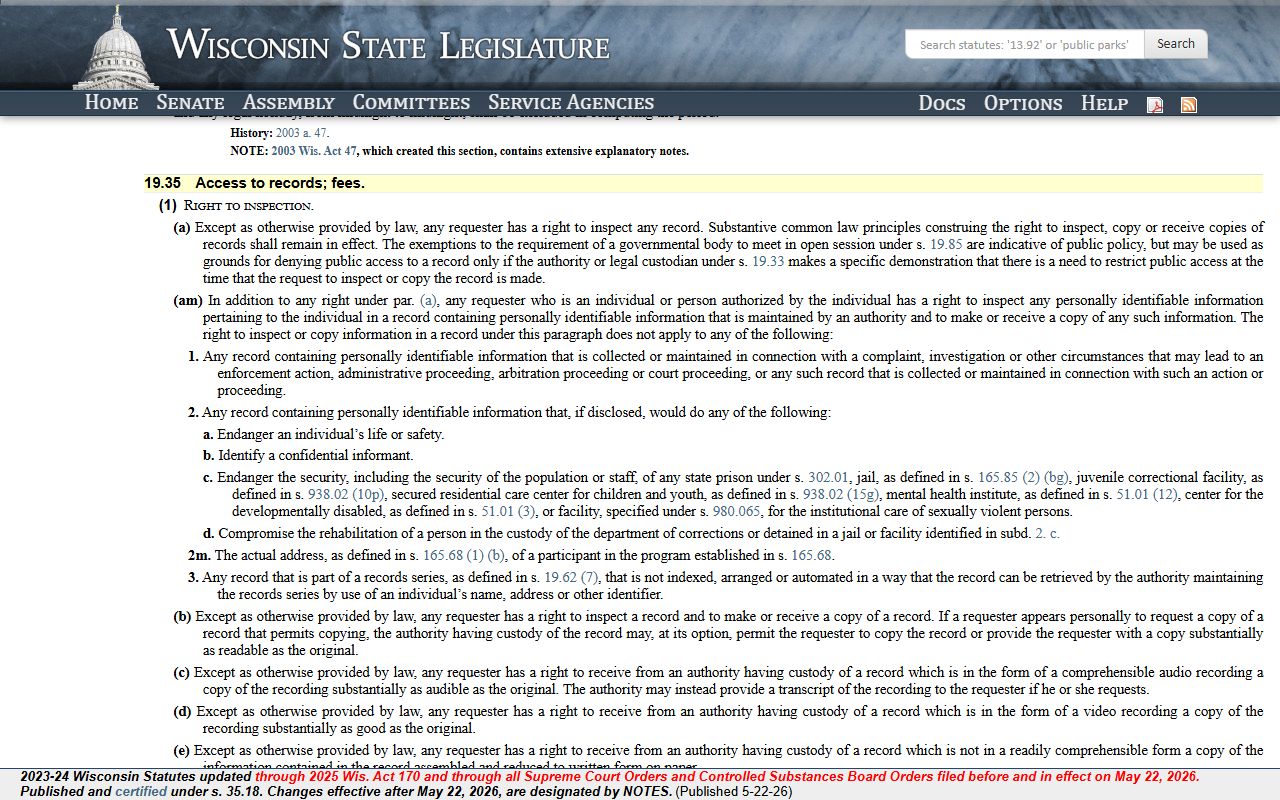
Requester rights and authority duties are set in Wis. Stat. § 19.35, the central access statute used for county, sheriff, and clerk records.
- Identify the record type and which office is the custodian.
- Use the court case number where possible, since it is the fastest path.
- Pick the right form: criminal, civil, or vital, depending on the record.
- Be specific about the documents you want.
- Submit to the custodian and pay any copy or certification fee.
Milwaukee County Public Records Fees
Fees depend on the record and the office. Court copies, vital certificates, and probate searches each have their own charge. The table below collects the common ones across offices.
| Record / Service | Fee |
|---|---|
| Criminal case copy | $1.25 per page |
| Criminal document certification | $5 plus copy costs |
| Probate copy | $1 per page |
| Probate mailed search | $4 prepaid plus a stamped envelope |
| Vital record first certified copy | $20 |
| Vital record additional copy | $3 |
Certified vital records may require a direct or tangible interest for certain records, plus a valid photo ID for mail orders.
What a Records Request Form Asks
Court record requests use a short form. A civil or family request and a criminal request collect similar information. Being specific about the document names speeds the response.
| Field | What It Collects |
|---|---|
| Case number(s) | The Milwaukee County court case to pull. |
| Party or case name | Helps staff locate the file. |
| Requester contact | Name, address, and phone or email. |
| Documents requested | Be specific: complaint, order, judgment, or docket. |
| Certification | Check if a certified copy is needed. |
| Delivery method | Mail, pickup, or electronic if available. |
The criminal request form uses an "All Search Name(s)" field and asks you to name documents such as a Criminal Complaint, Court Record, or Judgment of Conviction.
Limits and Confidential Records
Open access has limits. Some records are withheld by other laws, and some are balanced against privacy or safety. The state portal itself lists confidential case categories: adoptions, juvenile delinquency, child protection, termination of parental rights, guardianship, and civil commitments.
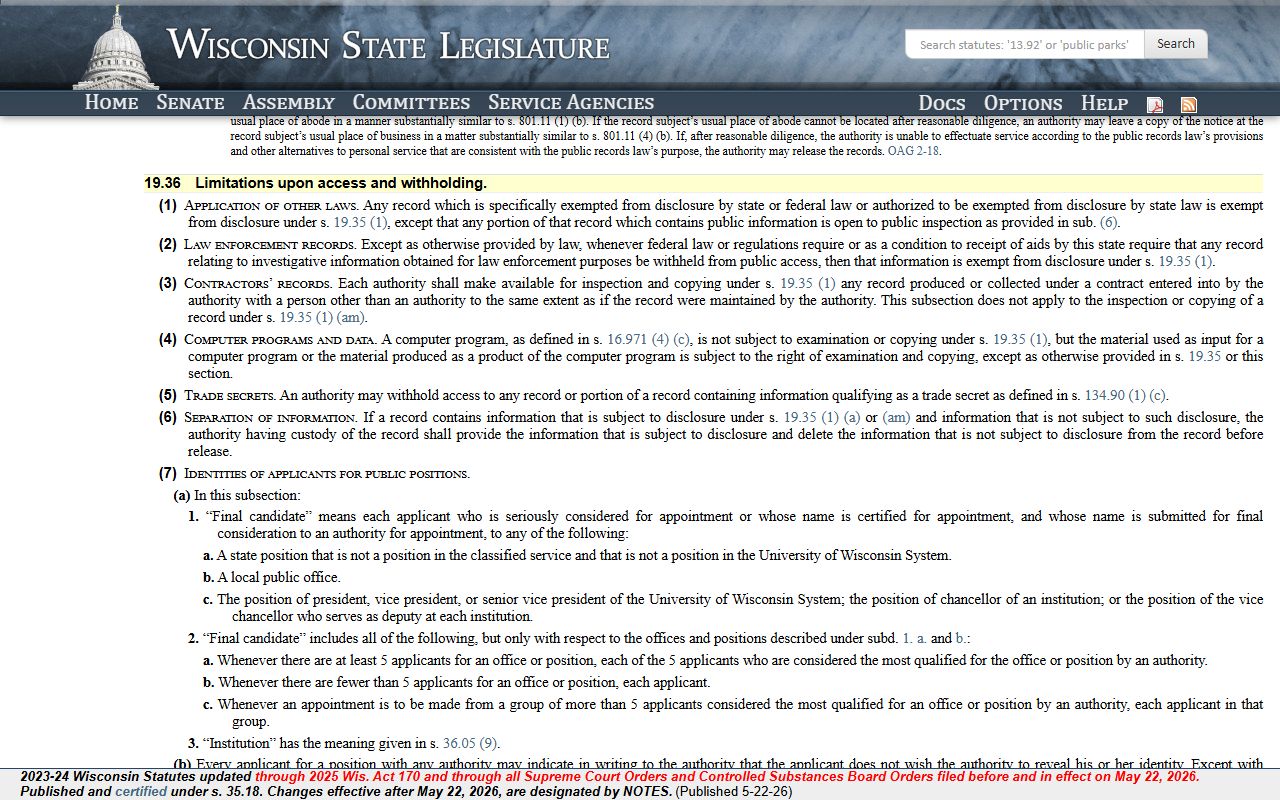
The limits and special categories are collected in Wis. Stat. § 19.36, which applies when a clerk or sheriff withholds juvenile, health, investigative, or confidential material.
Law-enforcement records add their own caveat. The Sheriff keeps them under the public records law, but they may be redacted or withheld under statutory limits and balancing tests.
Enforcement of a Denied Request
If a request is wrongly denied or delayed, the law provides a remedy. A requester can seek court review through a mandamus action. The enforcement statute allows damages, attorney fees, and other relief when access is unlawfully refused. That backstop is part of why Wisconsin's open-records law has real teeth.
Most requests never reach that stage. Being specific, naming the right custodian, and using a case number resolve the large majority of Milwaukee County public records requests without a dispute.
Note: Wisconsin law requires an authority to fill a records request as soon as practicable and without delay, so keep a copy of the date and wording of your request.
Court Records vs Agency Records
A key distinction shapes every request. Court records are case files held by the Clerk of Circuit Court and the Register in Probate. Agency records are administrative records held by the sheriff, the county clerk, the register of deeds, and other departments. The state case portal shows court summaries, but it is not the official judgment and lien docket, and it does not issue certified copies.
So a court summary, a certified court copy, and an administrative agency record are three different things from up to three different offices. Asking the right office the first time avoids a referral and a second wait.
Self-Help and Legal Aid in Milwaukee County
Help with records and procedure is available for free. The Wisconsin Court System self-help center explains how courts work and who does what. It also notes that court staff cannot give legal advice.
The Wisconsin self-help law center is a good starting point for procedure questions tied to a records request.
Local civil legal aid goes further. The Milwaukee Justice Center offers self-help and clinics for civil matters.

The Milwaukee Justice Center helps self-represented people, and Legal Action of Wisconsin and the Legal Aid Society of Milwaukee provide further civil legal aid.
Vital Records and Recorded Documents
Vital certificates are public records with their own rules. The Register of Deeds issues certified birth, death, marriage, divorce, and domestic partnership certificates. The county can issue birth certificates from October 1, 1907, death certificates from September 1, 2013, and divorce certificates from January 1, 2016. Marriage certificates for all recorded events are available in the office.
Some vital records require a direct and tangible interest, and mail orders need a valid photo ID. Domestic partnership records come only from the county where the event took place. For older genealogy, birth records run from the 1850s, death records from 1872, and marriage records from the 1830s, with genealogy visits reporting to Room G6.
Sheriff, State, and Federal Records Channels
Records also live outside the county building. The Sheriff Public Records Division handles jail and law-enforcement records, and the Sheriff page links accident reports through a separate report service. The Wisconsin DOC holds state prison and supervision records. Federal court records go through PACER, not the county or the state circuit portal.
Each of these is its own public-records channel with its own process. A request sent to the wrong system gets referred or denied, so confirm the channel before you file. The routing rule stays simple: match the record to the office that creates and keeps it. A crash report, a court traffic case, and a driver record, for example, are three separate records from three separate systems.