
How to Find Milwaukee County Arrest Records
Start with the Milwaukee County Sheriff In Custody Locator for anyone held now. It searches by last name, first name, gender, and birth year. Results show a booking number, name, height, and weight. Click a booking to see charges, bail, custody date, and location. The locator is run by the Sheriff and reflects current custody, not a full arrest history.
For the court side of an arrest, use Wisconsin Circuit Court Access. It shows the criminal case once charges are filed. The two systems link an arrest to a case, but they are different records. The locator sits at the Milwaukee County In Custody Locator, and the Sheriff's homepage is the Milwaukee County Sheriff page.
- Open the In Custody Locator and enter a last name.
- Add a first name, gender, or birth year to narrow common names.
- Open a booking number to see the charge table and bail.
- Search the person in WCCA to find the filed criminal case.
- Request copies from the clerk's Criminal Division if you need the file.
Arrest Record vs Criminal Court Record
People often mix these two up. An arrest record is the Sheriff's booking data. A criminal court record is the clerk's case file. The same event can sit in both systems, but each holds different details and answers a different question.
| Arrest Record | Criminal Court Record |
|---|---|
| Kept by the Milwaukee County Sheriff | Kept by the Clerk of Circuit Court |
| Booking number, charges, bail, custody date | Complaint, pleas, judgment, sentence |
| Found on the In Custody Locator | Found on WCCA and at the clerk window |
| Shows current jail status | Shows the full case outcome |
For full case history, use the Milwaukee County court records page. This page stays focused on the arrest and booking side.
What a Milwaukee County Arrest Record Shows
The booking detail is short but useful. An inspected profile showed the name, a mugshot behind a "Click to View Image" link, height, weight, hair, and eye color. It listed a bail or fine amount, the custody date, and a location code such as HOC. A charge table held the case number, the charge, a description, a severity code, the bail amount, and the court branch.
Severity codes are short. MA marks a misdemeanor class A. FH, FG, and similar codes mark felony classes. A modifier such as a dangerous-weapon enhancer can appear on its own line. The locator also has a Hold table with a reason and an agency, though it stays blank for many people.
| Field | What It Shows |
|---|---|
| Booking Number | The key identifier for the custody record. |
| Charges | Statute code, description, and severity class. |
| Bail or Fine | Amount set, plus type such as cash. |
| Custody Date | Date the person was booked in. |
| Location | Facility code for where the person is held. |
| Hold | Hold reason and agency, when one applies. |
The profile does not show a release date, the arresting agency, a booking time, or a cell. For that, call the Jail Records Office or check the court case.
Charges vs Convictions
This difference is the heart of an arrest record. A charge is an accusation. A conviction is a finding or plea of guilt. The Sheriff's locator states plainly that a booking does not establish guilt. Many charges are later reduced, dismissed, or never filed.
| Charge | Conviction |
|---|---|
| An accusation at or after arrest | A guilty finding or plea entered by the court |
| Shown in booking and at case filing | Shown as a judgment of conviction |
| Can be dropped, reduced, or dismissed | Carries the sentence and lasting record |
Important: Treating an arrest or charge as a conviction can break the law. Discrimination based on an arrest or conviction record may violate Wis. Stat. § 111.335.
Who Prosecutes Milwaukee County Arrests
After an arrest, the District Attorney decides whether to file charges. The Milwaukee County District Attorney prosecutes state-law and county-ordinance violations and litigates child-protection cases. Kent Lovern is the District Attorney. The office also runs victim and witness services.
The Milwaukee County District Attorney page sets out the office's prosecution role and victim services.
Federal arrests are different. They are prosecuted by the U.S. Attorney for the Eastern District of Wisconsin, and those cases never appear on WCCA.
The U.S. Attorney's Office for the Eastern District of Wisconsin handles federal prosecutions tied to arrests in the Milwaukee area.
From Arrest to Court Filing in Milwaukee County
Once charges are filed, the case enters the circuit court system. Wisconsin uses electronic filing for many case types. Filers must keep protected identifiers out of public documents, which is why a public file may show redacted or restricted material.
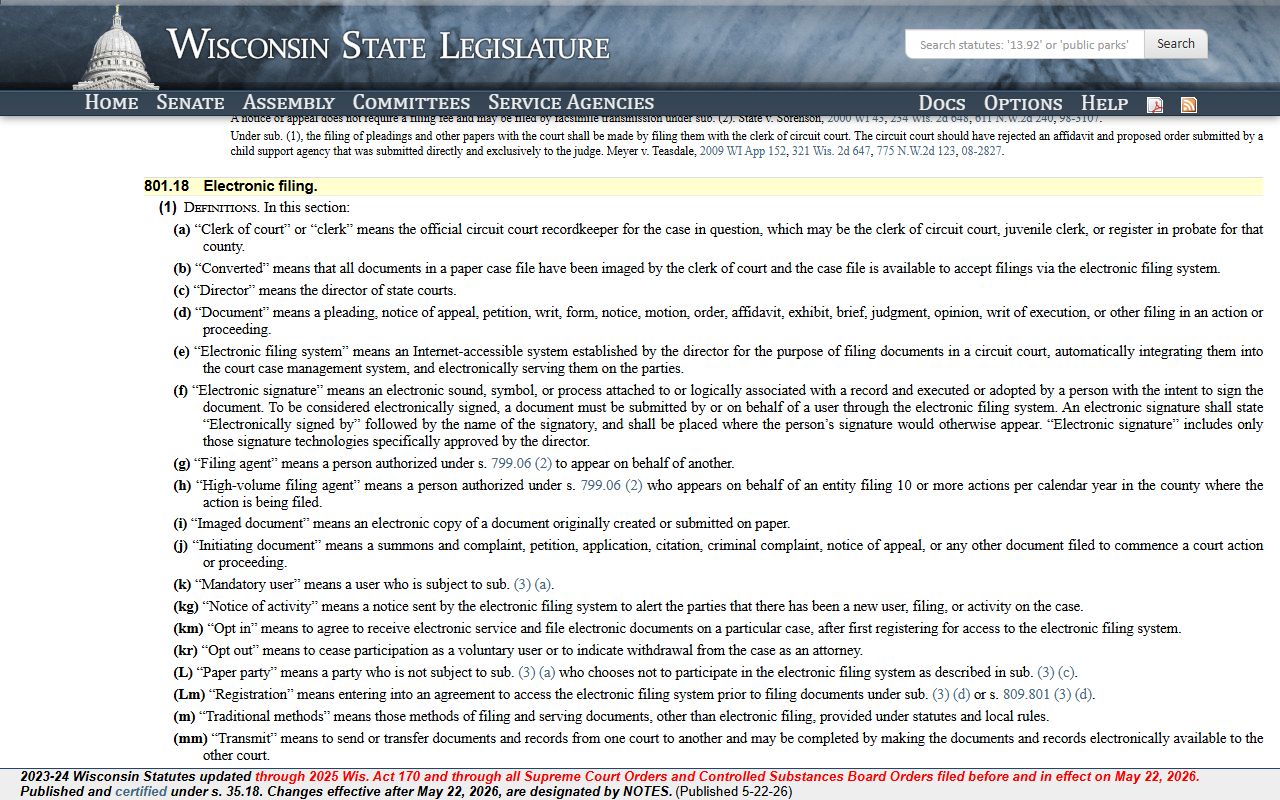
Electronic filing rules sit in Wis. Stat. § 801.18, which governs how Milwaukee County criminal cases move through the court system.
Once filed, the criminal case shows on WCCA with codes like CF for felony and CM for misdemeanor. Criminal copies cost $1.25 per page from the Safety Building Room 117 window, and certification adds $5.
Public Access Limits on Arrest Records
Most adult criminal case summaries are public, but the law protects sensitive data. Filers must omit or redact Social Security numbers, financial account numbers, and certain identifiers. Two statutes drive these rules in circuit court filings.
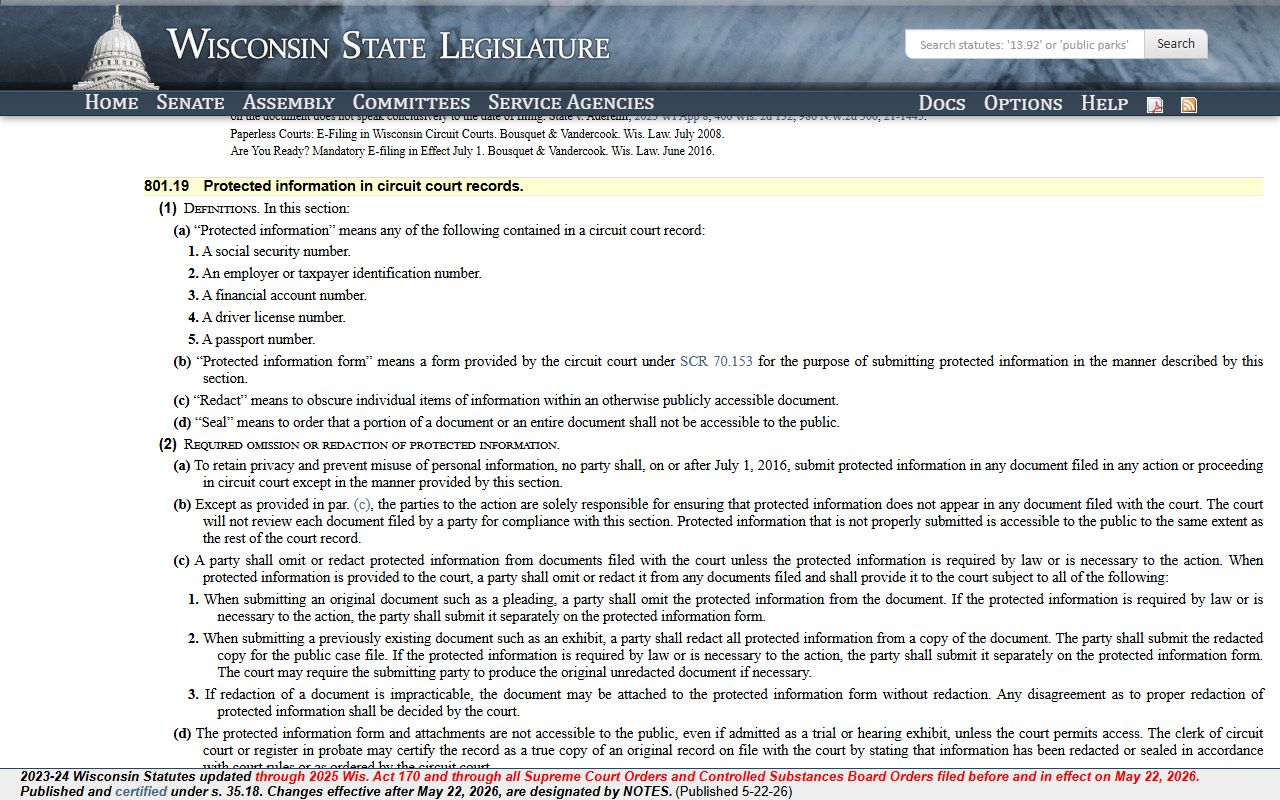
Protected personal identifiers are governed by Wis. Stat. § 801.19, which keeps items like Social Security numbers out of public Milwaukee County court filings.
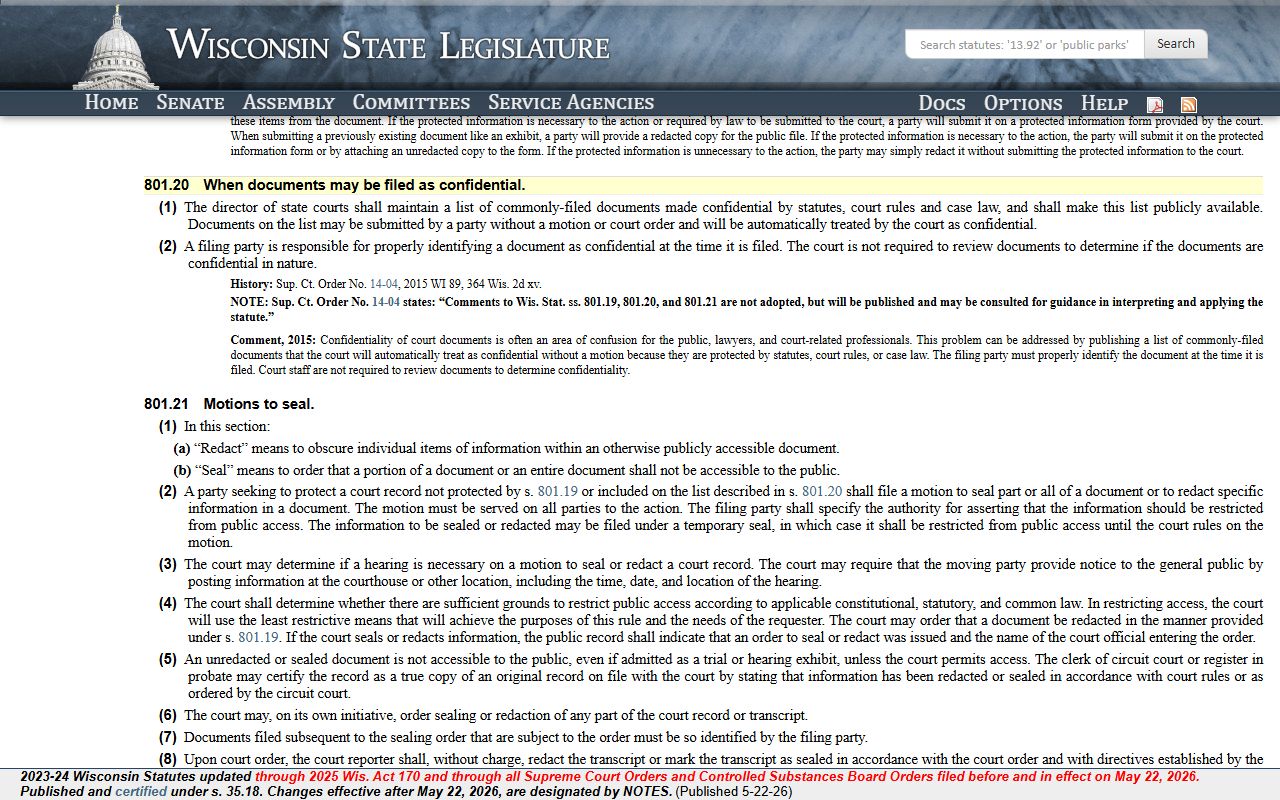
A companion rule, Wis. Stat. § 801.20, addresses how protected information is filed and why some material is restricted.
Whole categories also stay closed. Juvenile delinquency, child protection, and sealed cases do not display on the public site.
Sealed vs Expunged Milwaukee County Records
People often use these words as if they mean the same thing. They do not. A sealed record is closed to ordinary public access. An expunged record, under Wisconsin law, is sealed in full by court order, but it is not deleted from existence.
| Sealed Record | Expunged Record |
|---|---|
| Closed to public access without a court order | Entire criminal file sealed by the sentencing court |
| May apply to specific filings or categories | Set by statute and usually ordered at sentencing |
| Still exists with the clerk | Still exists, but no one can open it without an order |
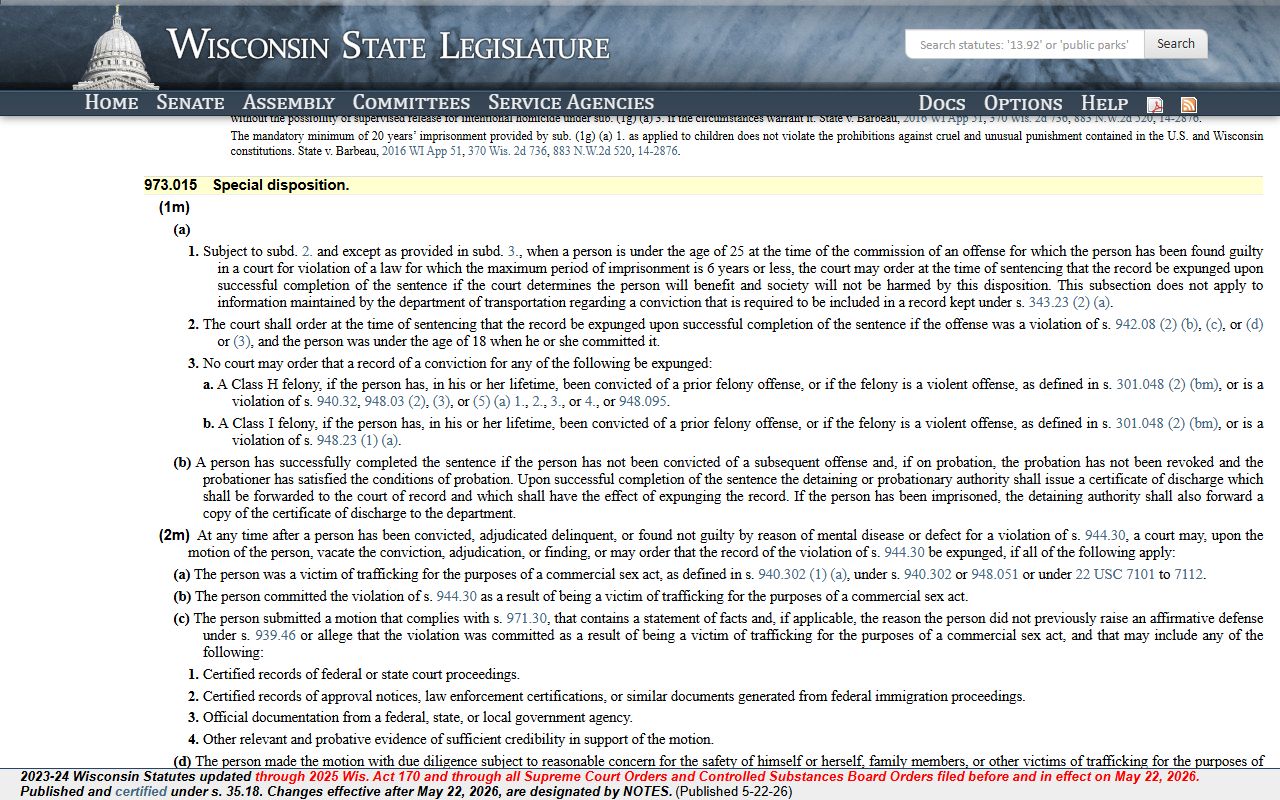
The main expungement statute is Wis. Stat. § 973.015, which lets a Milwaukee County sentencing court seal an eligible case. Expungement does not erase police reports, news stories, or private background databases, so a person may still need to correct those separately.
Mugshots and Recent Milwaukee County Bookings
The In Custody Locator holds the booking photo behind a "Click to View Image" link rather than showing it inline. The county uses the word "occupant" for people in the jail, not "inmate." A search for a common surname can return dozens of rows, so add a first name or birth year to narrow it. A Smith search in one session returned 41 results.
The locator only shows people held now. Someone arrested last month may not appear at all. If a person is not listed, they may have been released, moved to state custody, booked under another name, or held in another county. Check the court case in WCCA and call the Jail Records Office to confirm current status.
Note: A booking photo and charge list on the locator reflect the moment of intake, so always confirm the outcome in the court case before drawing any conclusion.
Background Checks and Milwaukee County Arrest Records
An arrest record search is not a full background check. The In Custody Locator shows current jail data. WCCA shows filed circuit cases. Neither is a complete, statewide criminal history. A formal background check runs through the Wisconsin Department of Justice criminal-history process, which is a separate request with its own fee and rules.
For employment or licensing, the safest record is a certified copy from the clerk, not a screen print. The Sheriff's locator warns that its data should not be relied on for legal action and may not be accurate. Use the official sources, and confirm a charge outcome before you act on it.